Tips and Techniques
Tips & Techniques
Gardeners who become savvy users of fine pruning tools soon see the value of cutting back and shaping by culling unwanted and inferior parts, when the season rewards their good efforts with bursts of lush new growth. This guide will put you on the right track.
Pruner Types
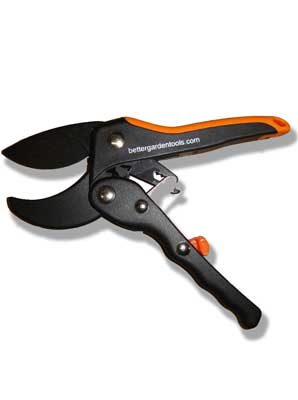
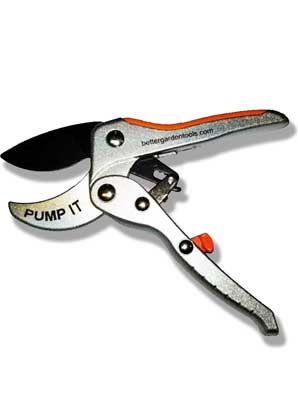
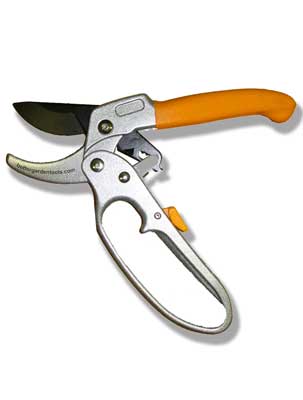
 | Ratchet Anvil Pruner Best for cutting woody stems or dead wood up to ¾ inch in diameter. Usually lighter in weight and are easier to sharpen. |
|
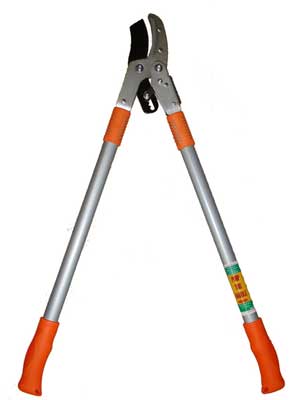
 | Ratchet Anvil Lopping Shear Basically a pruner with a long handle for extra leverage to cut branches up to 2 inches thick. Loppers come in anvil style, just like pruners. Will cut a branch closer to the trunk. |
Ratchet Pruner and Lopper Instructions

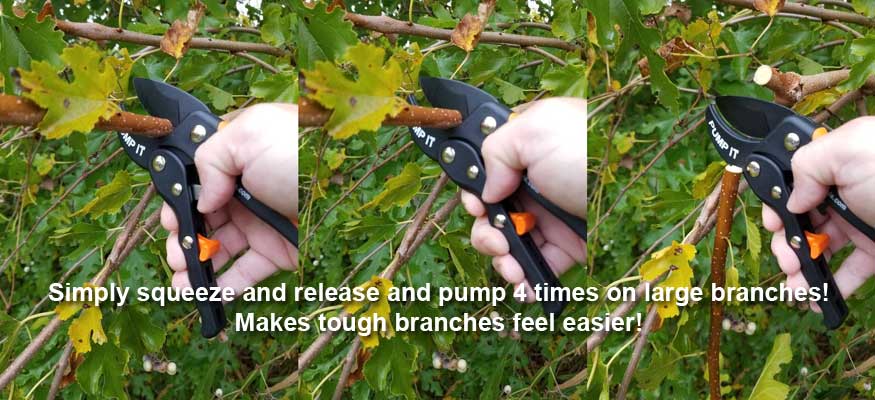
- Slide the branch to be pruned firmly under the blade and close the pruner without forcing them.
- Allow the pruner to return to the open position to allow the ratchet to engage (listen for the click) with the next notch.
- Repeat the operation three to four times until the branch is cut off.
Two Main Pruning Concepts:

Increases the density and sturdiness of the tree or plant.

Causes the plant to grow taller with better limb spread.
Pruning Deciduous ShrubsRemove all broken, diseased and crisscrossing branches. Remove a part of each long shoot that may spoil the shape of the shrub, and prune down to ground level about one-third of the oldest branches.
The Ideal Hedge ShapePrune hedges narrow the top to allow sunlight to reach the bottom foliage.
 | A Proper Cut Support the branch below where the cut is to be made. Cut at a slant in the direction you want the new branch to grow.
|
 | Cut Close Cut an unwanted branc in such a way as to leave a short stub. However, use caution not to cut too close to the collar. An unhealthy trunk wound can occur if a collar is disturbed.
|
 | Removing Heavy Limbs Use a 3-cut technique to avoid damage to a tree by splitting. Cut a (1) under the limb, then at (2) above and further out to remove the limb, and at (3) to remove the stub. The heaviest limbs may be supported by a rope. Always use proper safety procedures.
|
 | Choosing the Correct Bud Prune near a lateral (side) bud that is pointing in the direction that you want the subsequent branch to grow. Cutting of terminal (end) bud will cause the nearest lateral bud to inherit its strength and direction.
|
 | The Cut In Relation to Buds
- Too slanted - Exposes too much surface area to damage.
- Too long- Can cause dieback of the stub.
- Too short - Will interfere with bud growth.
- Ideal - Cut from opposite the base of the bud slanting upward to the top.
|
DO'S
- Always prune away dead, broken and diseased portions of a plant at any time.
- Cover cuts of 1 1/2" diameter or more with a protective wood compound.
- In general, prune weak plants hard and vigorous plants lightly.
- For safety and ease of pruning, use the correct tool for the job.
- Keep your tools sharp and clean. Clean cuts heal quicker.
- Make a cut only with a good reason and with an understanding of what your cut will produce.
- Always use proper safety equipment when pruning.
DONT'S
- Don't leave ragged cuts or stubs.
- Don't use hedge shears for general pruning.
- Don't prune with sprung, dull or improper tools.
- Don't do all your pruning at the same time.
- Don't expect pruning to compensate for defects caused by overcrowding, poor soil conditions, improper climate, etc.
- Don't assume that every good gardener is a good pruner. Check out casual advice before you prune.
- Don't climb trees! The hazards far outweight the benefits. Call a professional, or use a long-handled pole treem trimmer.
Tool Care Tips
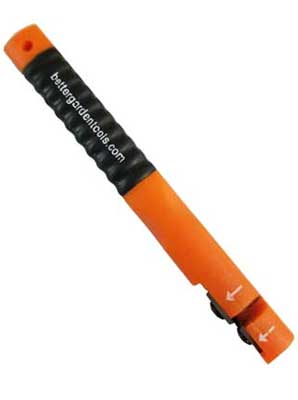
To sterlize pruning tools, mix 1½ cups of bleach and 2 gallons of water. After each cut, dip the pruner or saw into this solution before starting the next cut.
- Clean and oil tools after each use.
- Sharp tools cut better.
©2007 Better Garden Tools